
Following Films Podcast: Lilly Adams on OPPENHEIMER and the Impact of Weapons Testing

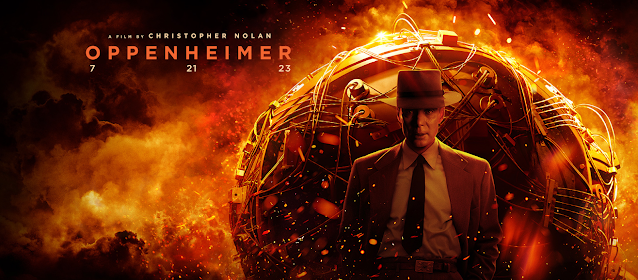
Oppenheimer

Today we are joined by Lilly Adams from the Union of Concerned Scientists to discuss OPPENHEIMER and the impact of weapons testing.

Ms. Adams works on nuclear weapons policy and outreach with a focus on supporting frontline community members impacted by the testing and production of nuclear weapons. 

OPPENHEIMER is currently is theatres.

Comments

Popular posts from this blog

Explaining the Ending of No Country for Old Men

No Country for Old Men is a tense, spare, and philosophical thriller that upends traditional narrative expectations. While it contains the elements of a crime drama—drug deals, hitmen, shootouts—it refuses to follow a conventional path. By the time the film ends, the central conflict seems unresolved, the villain walks away, and the protagonist we’ve been following disappears offscreen. To understand the film’s ending, one must look beyond plot and consider its themes: fate, violence, moral decay, and the erosion of order in the modern world. The Narrative Setup The story begins with Llewelyn Moss (Josh Brolin), a Vietnam veteran who discovers a drug deal gone wrong in the Texas desert and makes off with $2 million in cash. Anton Chigurh (Javier Bardem), a remorseless hitman, is sent to retrieve the money. Sheriff Ed Tom Bell (Tommy Lee Jones), a weary and introspective lawman, tries to make sense of the violence unfolding around him. At first glance, the film appears to set up a c...

Explaining the Ending of MULHOLLAND DRIVE

David Lynch’s Mulholland Drive remains one of the most haunting and enigmatic films ever made. It operates like a riddle that refuses to be solved, luring the viewer into a world where time, memory, and identity dissolve into one another. What begins as a mysterious, almost whimsical Hollywood fairy tale gradually transforms into a psychological nightmare. By the end, it’s clear that what we’ve been watching is not a mystery to be unraveled but an emotional landscape, the mind of a woman caught between fantasy and despair. The film tells the story of two women, Betty Elms and Rita, whose lives intertwine after Rita survives a car crash and loses her memory. Betty, a bright and optimistic aspiring actress freshly arrived in Los Angeles, takes her in. Together, they embark on an investigation into Rita’s identity, which unfolds like a noir detective story bathed in dreamlike light. Everything about this world feels heightened: Betty’s charm, the coincidence of events, and the ease with w...

Explaining the Ending of 2001: A Space Odyssey

Stanley Kubrick’s 2001: A Space Odyssey (1968) is a masterpiece of science fiction cinema, known for its ambitious themes, pioneering visual effects, and cryptic storytelling. The film culminates in one of the most enigmatic endings in cinematic history, as astronaut Dave Bowman undergoes a surreal journey through a cosmic gateway and is transformed into a new lifeform known as the "Star Child." To understand the ending, one must consider the film’s structure, symbolism, and philosophical inquiries into human evolution, technology, and transcendence. The Journey to the Infinite The final act begins after Dave Bowman disconnects HAL 9000, the malfunctioning AI that had killed his crew. Alone on the spaceship Discovery One , Bowman continues toward Jupiter, following a signal emitted from a monolith discovered on the Moon earlier in the film. These monoliths—rectangular, black, and featureless—are central to the film’s themes. Each appearance marks a leap in human evolution:...